
#CambiumImpact: Expanding Global Impact with an Exciting New Pilot
Every child deserves to see themselves as a scientist, a mathematician, a STEM trailblazer. At ExploreLearning, we make that vision possible with research-proven solutions that spark curiosity and drive achievement for learners of all abilities. And each year, we’re reaching more classrooms and more students.
Through Cambium’s new Global Impact Pilot, we’re partnering with school leaders and educators across Sub-Saharan Africa to explore how our tools can enhance student outcomes and foster a lifelong passion for math and science within their communities.
In Fall 2025, Senior Learning Designer Jesse Mercer traveled to DCT Bishop Stanway School, located just outside Dodoma, Tanzania, to launch the pilot and lead hands-on training sessions with educators. Together, Jesse and local teachers and students explored inquiry-based learning through Gizmos—interactive simulations designed to bring math and science to life.
A school on a mission
Bishop Stanway School is located 12 kilometers from the heart of Tanzania's capital and is a trailblazer in the country’s educational landscape. At a time when most schools taught in Kiswahili, Bishop Stanway distinguished itself as one of the earliest English-medium institutions, schools where English is the primary language for instruction.
From day one, the school’s mission has been clear: to provide affordable, quality education in English for families beyond the city center, particularly those from rural and remote areas. Unique among other schools in the area, Bishop Stanway prioritizes accessibility over profit. Student fees are modest, and transport services are available. “Every day we send school buses to come and bring them [students] – some of them 20 kilometers, some of them 30 kilometers,” said Bishop Stanway School Director, Daileth Mbelle.
When Daileth first arrived, the school faced serious challenges — low enrollment, limited resources, and a lack of trust. To turn things around, he invested time in building relationships. He held numerous meetings with parents and even visited them in their homes to listen to concerns and share his vision for the school.
For teachers, Daileth introduced training sessions to strengthen teaching methods and provide basic technology skills. These efforts laid a strong foundation for growth, and enrollment continues to rise, a clear sign that his efforts are paying off!
“We don't have parents who pull us back. There are those who are ready to push forward, that's really great, that's an asset.” – Daileth Mbelle

Students at Bishop Stanway School, Dodoma, Tanzania

Entrance to Bishop Stanway School
A new era for STEM education
While English has flourished at Bishop Stanway, STEM subjects remain areas where the school is working hard to raise the bar. Daileth shared that parents emphasize the need to improve science results. While other subjects are performing well, science and math still haven’t reached the level the school is aiming for. Progress has been steady but slow. In daily meetings, teachers discuss strategies to boost students’ interest and enthusiasm for STEM subjects.
For years, technology played only a small role in teaching at Bishop Stanway. “Mostly, technology was not much used,” Daileth explained. The school once participated in a tablet project designed to enhance instruction. While teachers used the tablets, they found them more suited for social subjects than for math. Large class sizes (often 40 to 60 students) made it difficult to give every child hands-on practice during lessons. Teachers relied heavily on lectures, and science and math instruction in particular saw little technological integration. But with Gizmos, that’s beginning to change.
Daileth reflected on when Jesse first introduced Gizmos. “I saw how teachers were excited with the system. The teachers were so excited. I encouraged the application of technology in teaching, and I expect my teachers will receive it positively, but I didn't expect they would receive it to that extent.”
From teacher reluctance to excitement: Embracing Gizmos
Daileth explained that he was prepared for some staff reluctance, as some of them may not be familiar with computers. In the past, the school organized basic computer training to help teachers gain confidence. After first leading students through a Gizmo-based lesson, Senior Learning Designer Jesse began teaching the faculty. They received their accounts, practiced logging in, researched simulations, and worked through the Teacher's Guide and the Student Exploration Guide. The excitement about the tool was so contagious, and soon teachers were hosting their own Gizmos-based lessons.
When we asked teachers about their experience, one moment stood out. Mr. Joseph, a math teacher with over 40 years in the classroom, shared that he had never considered moving around during lessons to check on students or ask questions. Yet after working with our team, and following the inquiry-based design of the Gizmo and associated student guide, he was doing exactly that: circulating, guiding, and using questions to spark thinking instead of lecturing. In fact, he quadrupled the number of questions he asked his students compared to a lesson Daileth observed prior to the pilot's start! While this represented a significant shift for him, you could see him learning and adapting in real time. He was thrilled to learn a new practice and to witness the positive impact it had on his students, who were clearly engaged and thriving in their learning. The transformation in a single lesson was remarkable.
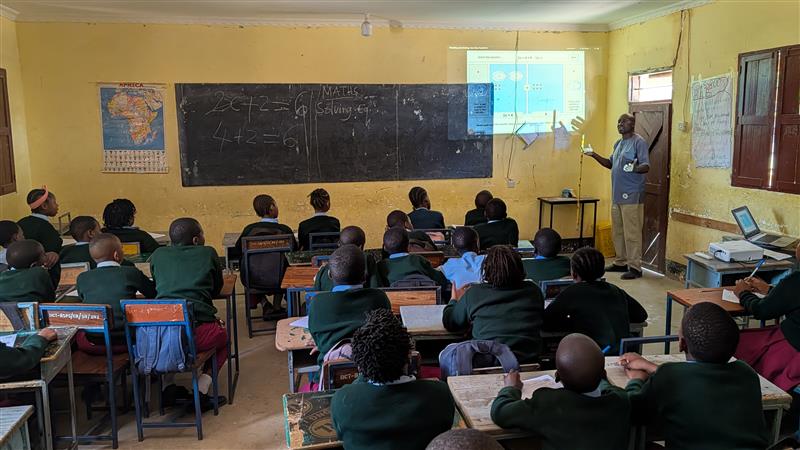
Mr. Joseph teaching a Gizmos-based lesson
After their week of training, teachers began pre-testing students in preparation for implementing two additional ExploreLearning solutions, Frax and Reflex. These benchmarks will provide valuable insights into how these programs impact learning outcomes once implementation begins. Both students and teachers are excited to dive in and continue learning with these powerful tools!
“Even now, the students themselves – they demand [Gizmos],” said Daileth. “It's not only the teacher, the students themselves, they come and demand it. When are we starting to use this? When are we using this? Want to use this? They demand it and they feel like it can help.”

Students at Bishop Stanway School learning with Gizmos
Envisioning what’s ahead
For Daileth, success with the pilot program hinges on two key goals: First, improved performance in science and math—subjects that have long been a challenge for the school.
Second, success means integration of technology into teaching. “Success to me is when my teachers will not be strangers to technology, when they'll embrace technology and technology is part of their teaching,” Daileth said.
He envisions classrooms where tablets, projectors, and interactive tools, such as Gizmos, are part of everyday learning. “I've seen that there is readiness of teachers,” he explained. And with students asking to use the tools, it motivates teachers even more. The school leadership has committed to supporting teachers every step of the way.

Educators at Bishop Stanway School preparing for a lesson with Gizmos
“We have made a promise to ourselves, because you know, just teaching what you have brought for us, it's going to shape the destiny of kids. It's going to make some kids love math, love science… They will have a good relationship with the subject, and that automatically will promote a good result and shape their destiny. Some kids who were supposed to fail the subject, just because they were not taught well, will pass it, and they will become someone later on in their life.”
As Bishop Stanway School moves into full Gizmos implementation, we’re eager to hear more stories from Daileth and his team. Alongside teacher and student feedback, we’ll be collecting actionable data on math and science performance to measure the impact of this pilot. Our goal isn't just to track STEM success, but to understand how thoughtfully designed tools can empower educators and transform learning outcomes, no matter the context. This is only the beginning, and we look forward to sharing what we learn!
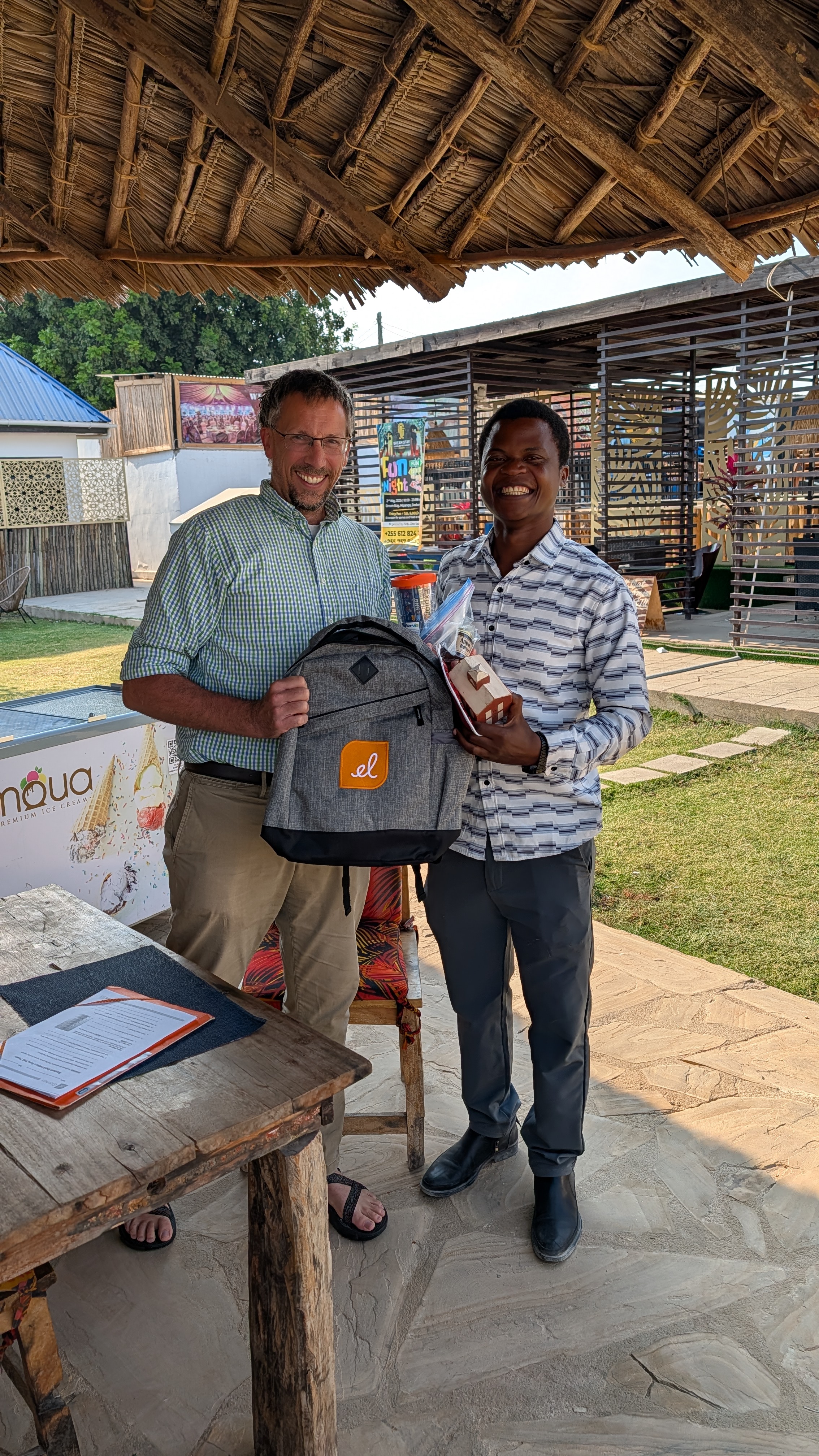
Senior Learning Designer Jesse Mercer and Bishop Stanway School Director Daileth Mbelle
This post was originally published on ExploreLearning's Blog.